
Nanobubble wastewater treatment for STPs and ETPs
High-oxygen aeration retrofits for sewage and effluent plants, with no new tankage. The evidence so far is a bench-scale trial at Pirana, Ahmedabad.
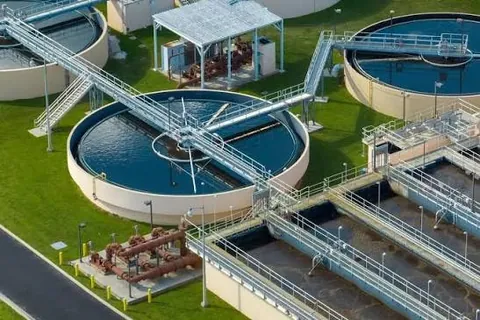
The aeration problem
Aeration is usually the biggest energy cost in a biological treatment plant, and it is often uneven. Diffusers push coarse bubbles through the tank. Much of the gas escapes to the air, and dissolved oxygen varies by zone. Operators add chemicals, extra blowers or more tank volume to compensate.
Nanobubble aeration changes the delivery. Because the bubbles stay in the water, the same gas has more time to dissolve, so you can raise dissolved oxygen without major civil work. Whether that translates to lower energy, better effluent quality or both is what a pilot should measure on your plant, with your own meters and your own laboratory.
Where units fit
- Equalisation tank, ahead of coagulant dosing. Pre-aerate to start oxidation before the process train.
- MBBR and aeration basins. Support biological treatment where dissolved oxygen is the limiting factor.
- Polishing and disinfection. Ozone nanobubbles can reduce microbial load without chlorine dosing.
- Sludge and holding tanks. Keep oxygen up to reduce odour from stagnant zones.
We install as a side-stream beside an existing tank or plumb in-line, so the plant keeps running while we work. See the nanobubble generators.
Pirana STP, Ahmedabad: the bench trial
In December 2024, Ahmedabad Municipal Corporation allowed a two-day trial at the 180 MLD Pirana sewage treatment plant. We treated a raw-sewage sample in 60-minute batches, once with oxygen nanobubbles and once with ozone nanobubbles.
Oxygen cut COD from 145.88 to 20.84 mg/L and BOD from 72 to 8 mg/L. Ozone left E. coli below 2 MPN/100 mL. This was a bench-scale trial, not a plant installation, and we do not present it as a full-scale result.
In a sewage plant, nanobubble aeration is one step in a longer process train that also includes screening, biological treatment, settling and polishing. The trial isolates what that one step does. On its own, oxygen nanobubble treatment achieved NGT discharge norms for BOD and COD. Suspended solids are removed by the settling and filtration steps that follow in a real plant, so the plant as a whole is judged on all parameters together.
Energy, compliance and what we do not yet claim
Lower gas demand for the same dissolved-oxygen target can reduce aeration energy, but we have not published a metered comparison, and we will not quote a saving until we have one. On compliance, nanobubble aeration can support meeting discharge limits; your limits come from your consent conditions and we agree them with you before any pilot.
Oxygen nanobubbles did not raise dissolved oxygen in the Pirana batch (6.4 to 6.2 mg/L), and we did not measure odour. Both are on the case-study page.
How we would run a plant pilot
- Baseline. We review your flow sheet, aeration set-up and consent conditions, and sample influent and effluent over several days.
- Installation. A unit goes in as a side-stream on one tank, so the rest of the plant keeps running unchanged.
- Metering. We log dissolved oxygen and power use at the unit and in the tank, so energy can be compared with a real number rather than a nameplate.
- Comparison. Where the plant has parallel trains, we compare a treated train with an untreated one. Where it does not, we compare against the baseline period.
- Decision. We review the data against the targets agreed at the start and recommend whether to scale, change the design or stop.
STP and ETP differ
Municipal sewage is variable but broadly predictable. Industrial effluent can contain compounds that behave very differently, so an ETP pilot starts with a characterisation of the stream, and may call for ozone, oxygen or both. We would not apply a result from one to the other without testing.
What to measure
- Dissolved oxygen at several depths and times of day.
- BOD, COD, TSS and turbidity, influent and effluent.
- Ammonia, nitrite and nitrate where nitrification matters.
- Microbial indicators where disinfection is a goal.
- Power use, and the volume of gas used.
- Sludge volume and odour, recorded consistently.
Wastewater FAQ
What problem do nanobubbles address in an STP or ETP?
Oxygen supply. Biological treatment needs enough dissolved oxygen, and conventional diffusers lose much of their gas to the surface. Nanobubbles stay in the water longer so more of the gas dissolves.
Where does a unit fit in a plant?
Common positions are the equalisation tank for pre-aeration, MBBR or aeration basins for biological support, and polishing steps. We review your flow sheet before recommending a point.
Has this been proven at plant scale?
Our Pirana STP data is from a bench-scale trial with a sample of up to 100 litres. Plant-scale results need an on-site pilot, which we would plan with you.
Will it save energy?
Less gas needs to be pumped to reach a given dissolved-oxygen target, which can cut aeration energy. We have not published a metered energy comparison, so we do not quote a saving. A pilot with logged power would give you a real figure.
What about ozone?
Ozone nanobubbles help with disinfection. In our Pirana bench trial, E. coli fell below 2 MPN/100 mL and total coliform was absent, but COD and BOD fell far less than with oxygen.
Does it help with CPCB compliance?
It can support compliance by improving oxygen supply and organic-load removal. Discharge limits depend on your consent conditions, so we agree targets with you after assessing the plant. We do not guarantee compliance.
What maintenance does it need in sewage?
In high-solids streams, our standard protocol includes weekly cleaning to keep rated performance.
What data do you need to size a pilot?
Flow, current aeration set-up, influent and effluent quality, consent limits, and power availability at the point of installation.
Does it work on industrial effluent?
It may, but we have not published an industrial case. Effluent chemistry varies widely, so we would characterise the stream first and choose oxygen, ozone or both on that basis.
Running an STP or ETP with aeration limits?
Share your flow sheet and consent limits. We will propose a pilot with measurements agreed up front.