
Nanobubble generator for aquaculture
Steadier dissolved oxygen through feeding peaks and warm nights in fish ponds and tanks. Two 100-day pilots in Assam, with the data and the limits of each.
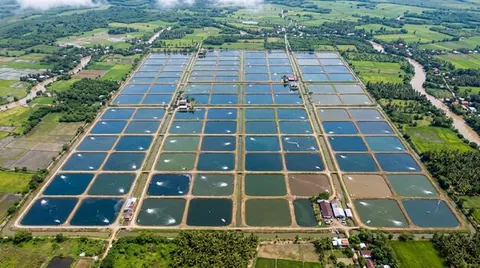
The oxygen problem in fish farming
In intensive ponds and tanks, oxygen is the first limit. Fish eat and respire more in warm weather, algae and bacteria use oxygen overnight, and ammonia builds as biomass grows. When oxygen sags, fish stop feeding, grow slower and die in the worst cases.
Nanobubble aeration aims to hold dissolved oxygen higher and steadier, which also supports the bacteria that convert ammonia. We use air-fed NanoAer units, which need no oxygen supply.
Tengra tank trial, Hajo
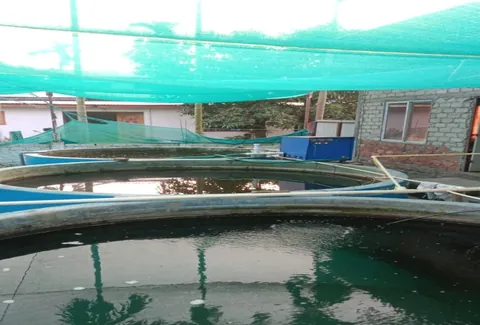
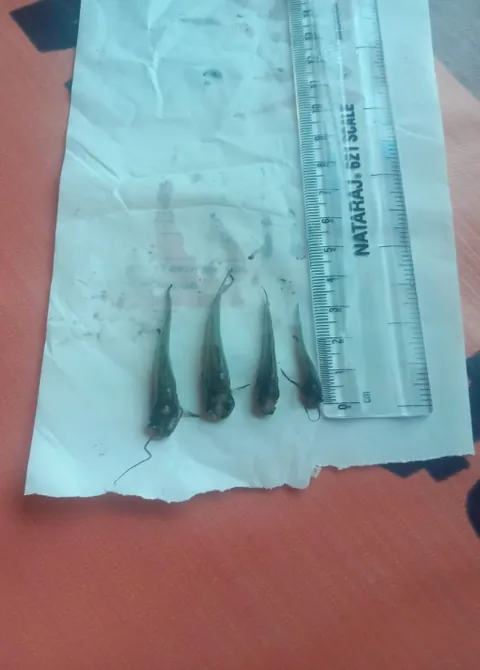
At the Hajo Large Biofloc Centre in Kamrup, we ran 100 days from November 2025 with three 10,000-litre tanks: a control and two nanobubble tanks (3,000 and 6,000 fish).
At day 100, morning dissolved oxygen was 6.0 mg/L in the control against 8.2 and 7.8 mg/L in the nanobubble tanks. Survival also favoured the nanobubble tanks, and the trial reports a lower feed conversion ratio with nanobubbles (FCR 0.85 in the control, 0.65 and 0.55 with nanobubbles).
Limit: the control used conventional aeration 12 hours a day with 30% weekly water exchange; the nanobubble tanks ran 24 hours a day with 15% exchange. The trial does not isolate the nanobubble generator.
Open-pond carp pilot, Nadipar
From April 2026, several NanoAer 10 units ran in a 0.5-acre earthen pond stocked with rohu, mrigal, grass carp and catla. Dissolved oxygen rose from 3.5 to 7.6 mg/L by day 90, ammonia went from 1.0 ppm to not detected, and pH moved from 6.2 to 7.6. Pond biomass grew from about 130 kg to about 453 kg by day 100.
Limit: there was no control pond, so the results are field evidence, not a controlled comparison. Water temperature also rose from 26 to 35 °C over the cycle.
Fit with your existing system
NanoAer installs beside the pond or tank on a recirculation loop. Keep your current aerators for now; we compare the two in a pilot with a matched control. We would record morning and evening dissolved oxygen, water chemistry, survival, feed and harvest weights, so FCR and return can be calculated properly.
For intensive systems, see oxygenation for biofloc and RAS fish farms.
Why morning oxygen readings matter
Fish ponds make oxygen in daylight and use it overnight. Dissolved oxygen is therefore lowest just before dawn, which is also when stressed fish start to gasp at the surface. A single midday reading can look healthy while the pond is in trouble by 5 a.m. In the Tengra trial we recorded morning and evening values for this reason, and we recommend the same in any pilot.
Setting up a trial that will convince you
- Run a matched control pond or tank, with the same stocking, feed and water exchange.
- Change one thing: the aeration method.
- Record dissolved oxygen morning and evening, plus ammonia, nitrite, pH, temperature and ORP at fixed intervals.
- Log feed by tank or pond, and count fish at harvest, so survival and FCR can be calculated.
- Agree in advance how you will judge the result.
Both Assam reports make the same recommendation for the next cycle: a matched control pond with twice-daily oxygen readings and full survival and feed records. We agree, and that is the design we propose.
Aquaculture FAQ
Does nanobubble aeration reduce fish mortality?
In our Tengra tank trial, survival was 88% in the control and 95% and 92% in the nanobubble tanks. Control and nanobubble tanks differed in aeration hours and water exchange, so treat this as supportive, not conclusive.
Do the results prove nanobubbles improve growth?
They are consistent with it. The Tengra trial had a control but also different aeration and water-exchange settings. The Nadipar carp pilot had no control pond. A matched control pond is the next step.
Which species have you tested?
Tengra (Mystus) in tanks and a mix of rohu, mrigal, grass carp and catla in a pond. Both are freshwater. We have no published shrimp data yet.
Which nanobubble generator do you use?
NanoAer, which uses ambient air. Both pilots used 10 LPM units. See the specifications.
Can it replace my paddle-wheel aerators?
It can work alongside them. We review your current set-up before recommending any change.
How many units does a pond need?
It depends on pond area, depth and stocking. The 0.5-acre Nadipar pond used several NanoAer 10 units.
What should I measure in a pilot?
Morning and evening dissolved oxygen, ammonia, nitrite, pH, temperature and ORP at fixed intervals, plus survival, feed and harvest weights so you can calculate FCR.
What power does it need?
NanoAer 10 draws 1.6 kW on single-phase 220 V. See the specifications for other sizes.
Running a fish farm?
Tell us species, stocking density and your current aeration. We will propose a pilot with a control.