
NanoAer air nanobubble generator
An air-fed nanobubble generator for ponds, tanks and general oxygen support. Four sizes from 5 to 50 LPM, with no oxygen supply needed.
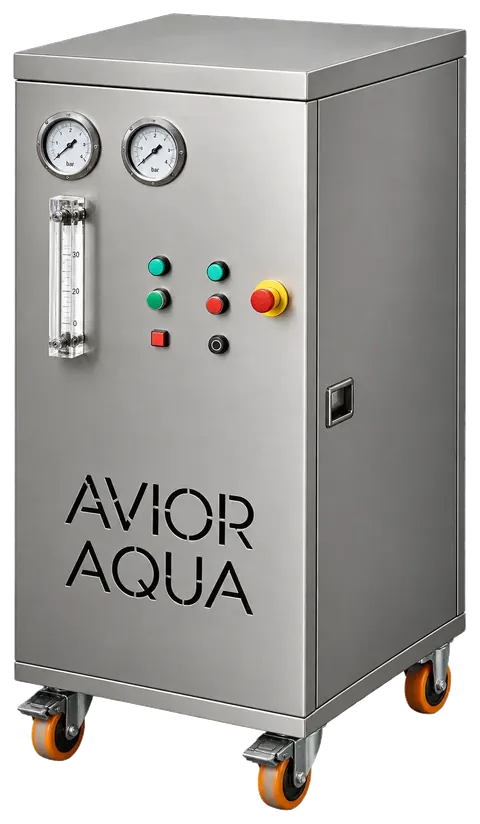
What the NanoAer is
NanoAer is our air-fed nanobubble generator. It uses ambient air, so it needs no oxygen cylinders or concentrator. It makes bubbles smaller than 200 nanometres, which stay suspended and transfer oxygen more effectively than coarse bubbles.
Typical uses
- Fish ponds and tanks, where oxygen has to hold through feeding peaks and warm nights.
- General oxygen support in ponds and small water bodies.
- Sites where an oxygen supply is not practical.
What you need on site
- Single-phase 220 V power for NanoAer 5 and 10, or three-phase 440 V for NanoAer 30 and 50.
- Water inlet and outlet connections of 1 to 6 inches, depending on the model.
NanoAer specifications
| Specification | NanoAer 5 | NanoAer 10 | NanoAer 30 | NanoAer 50 |
|---|---|---|---|---|
| Power (kW) | 1 | 1.6 | 3.5 | 7.7 |
| Voltage (V) | 220 | 220 | 440 | 440 |
| Connection | Single phase | Single phase | Three phase | Three phase |
| Gas feed | Air | Air | Air | Air |
| Rated gas flow (LPM) | 5 | 10 | 30 | 50 |
| Water flow (m³/hr) | 7 | 15 | 50 | 85 |
| Max water temperature (°C) | 50 | 50 | 50 | 50 |
| Inlet / outlet (inch) | 1 / 1 | 2 / 1.5 | 3 / 2.5 | 6 / 4 |
Why an air-fed unit for farms and ponds
Oxygen cylinders and concentrators add cost, logistics and a point of failure. For a fish farm in a remote district, that matters. NanoAer takes its gas from the air around it, so the only inputs are power and water. The trade-off is that air carries far less oxygen than pure oxygen, so for work that needs very high dissolved oxygen, NanOxy is the better choice.
Planning your power
On the nameplate, a NanoAer 10 draws 1.6 kW, which is up to 38.4 kWh over 24 hours of continuous running. The nanobubble tanks in our Tengra trial ran their unit 24 hours a day. Actual draw depends on load, so we recommend metering during any pilot.
Where the unit goes
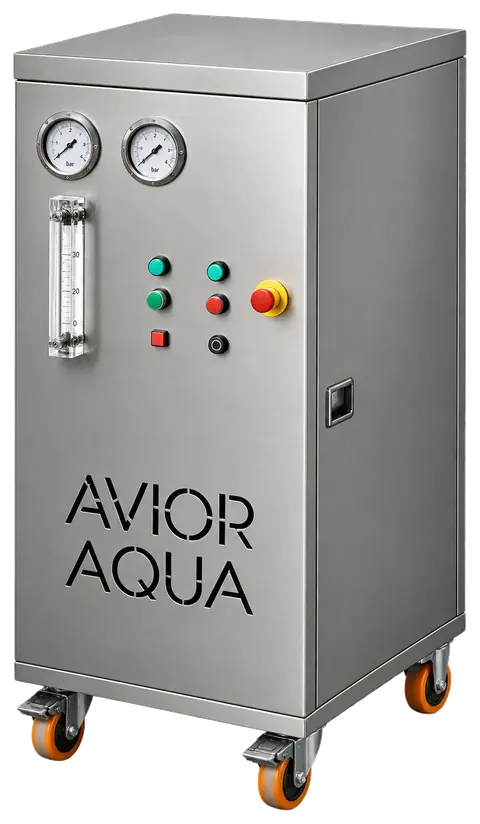
NanoAer is a skid on castors, so it sits on the bank beside a pond or tank, with an intake and a return line into the water. For larger ponds we place several units around the margin, as in the Nadipar pilot, so oxygen is spread through the water rather than concentrated at one point. The right number and positions depend on pond shape, depth and stocking, and we confirm them at the assessment.
Working with existing aerators
Many farms and fisheries already run paddle-wheel or blower aerators, and most will not want to rip them out for an untested alternative. NanoAer can run alongside them. In a pilot we would keep your current aeration in one pond or tank and add the nanobubble generator to another, so the comparison is fair.
Where it has run
- Tengra tank trial, Hajo, Assam: a 10 LPM air unit on 10,000-litre tanks, against a control, over 100 days.
- Carp pond pilot, Nadipar, Assam: several NanoAer 10 units in a 0.5-acre pond over 100 days. No control pond was run.
The tank trial used different aeration hours and water exchange for the control, so it is not a like-for-like test of the nanobubble generator alone. The case study explains why.
NanoAer FAQ
When should I choose NanoAer over NanOxy?
Choose NanoAer for ponds, tanks and general oxygen support where air is enough. Choose NanOxy when you need higher dissolved oxygen.
How much power does it draw?
From 1 kW for NanoAer 5 to 7.7 kW for NanoAer 50. See the specification table above.
Can I run several units in one pond?
Yes. The Nadipar pond pilot used several NanoAer 10 units to spread oxygen through a 0.5-acre pond.
Does NanoAer replace my paddle-wheel aerators?
It can work alongside them. We would review your current set-up before recommending any change.
Does it work in saltwater or shrimp ponds?
We have not yet published trials on shrimp or saltwater. Our aquaculture data covers freshwater carp and Tengra.
Do I need an oxygen cylinder or concentrator?
No. NanoAer uses ambient air, so it needs only electrical power and water connections.
How do I know if my pond needs it?
Measure dissolved oxygen just before dawn for a week. If it falls below the level your species needs, or if ammonia keeps rising as biomass grows, a pilot is worth discussing. See our aquaculture data.
What maintenance is needed?
Routine checks in clean water. In dirty water, weekly cleaning is part of our standard protocol.
Want a NanoAer quote?
Tell us your flow, gas supply and site. We reply within two working days.