
ETP and STP upgrade without new civil work
When an effluent or sewage treatment plant stops keeping up, the usual answer is more concrete: a bigger aeration tank, an extra clarifier, sometimes a new plant. In many plants the real limit is not tank volume. It is oxygen. The bacteria that do the treatment can only work as fast as oxygen reaches them, and an aeration system that was sized years ago for a smaller load runs out of headroom long before the tanks do.
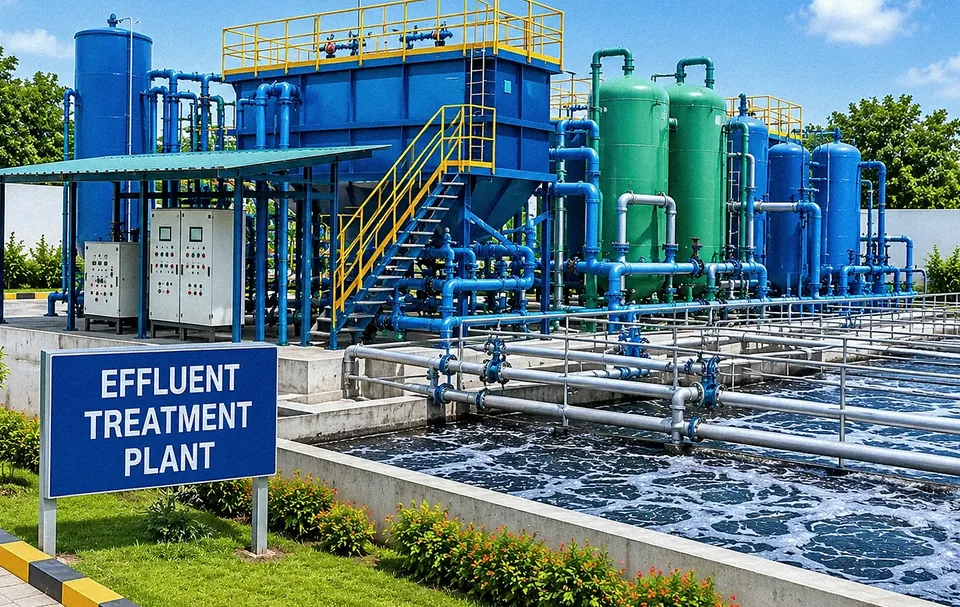
This page explains how to tell whether your plant is limited by oxygen, by hydraulics, by chemistry or by sludge handling, what each upgrade route involves, and where nanobubble generators fit - and where they don't.
Signs your plant needs an upgrade
| What you see | What it usually means | Check this first |
|---|---|---|
| Outlet COD or BOD creeping up over months | Organic load has grown past what the biology can oxidise | Inlet load trend (flow x COD) against design |
| Dissolved oxygen in the aeration tank stays low with blowers at full output | The aeration system has run out of capacity | DO at several points and depths; diffuser condition |
| Sludge and chemical consumption rising faster than production | Process is compensating for an upstream problem | Dosing records, jar tests, pH log |
| Dark, smelly mixed liquor or poor settling in the clarifier | Low oxygen zones; filamentous growth | SVI test; DO profile; microscope check |
| Plant overflows or short-circuits at peak hours | Hydraulic overload | Peak flow against design flow and retention time |
| New production line or new buildings coming online | Load will rise beyond design | Projected flow and COD |
Upgrade routes compared
| Route | What it fixes | Civil work | Downtime | Best when |
|---|---|---|---|---|
| Dosing and operations review | Overdosing, pH swings, poor wasting practice | None | None | Costs are high but the plant is not overloaded |
| Aeration upgrade | Oxygen shortage | Low to medium | Partial, tank by tank | Diffusers are fouled or blowers undersized |
| Process conversion (such as MBBR media) | Biological capacity | Medium | Partial | Tank volume is the limit |
| New tanks or a parallel train | Hydraulic and biological capacity | High | Low, but a long build | Flow has outgrown the plant |
| Side-stream nanobubble retrofit | Low DO, poor settling, septic equalisation | None in the tanks | None in most layouts | Load has grown; hydraulics are within design |
Where nanobubbles fit
Equalisation tank. Effluent that sits in an equalisation tank without oxygen turns septic: it smells, its pH drifts, and it arrives at the biological stage already stressed. Oxygen nanobubbles added here keep the tank aerobic so the biology downstream receives a steadier feed.
Aeration or MBBR tank. This is the most common use of nanobubble wastewater treatment. A side-stream generator adds oxygen to the tank alongside the existing aeration system. In some plants it lets an overloaded system recover its dissolved oxygen; in others it carries part of the oxygen demand so blowers can be turned down. Whether a plant can replace its existing aerators entirely depends on its oxygen demand and is decided after an assessment, not assumed.
Tertiary and polishing. Ozone delivered as nanobubbles is used for disinfection and oxidation before discharge or reuse. This is a separate duty from biological aeration and is sized separately.
How a retrofit works
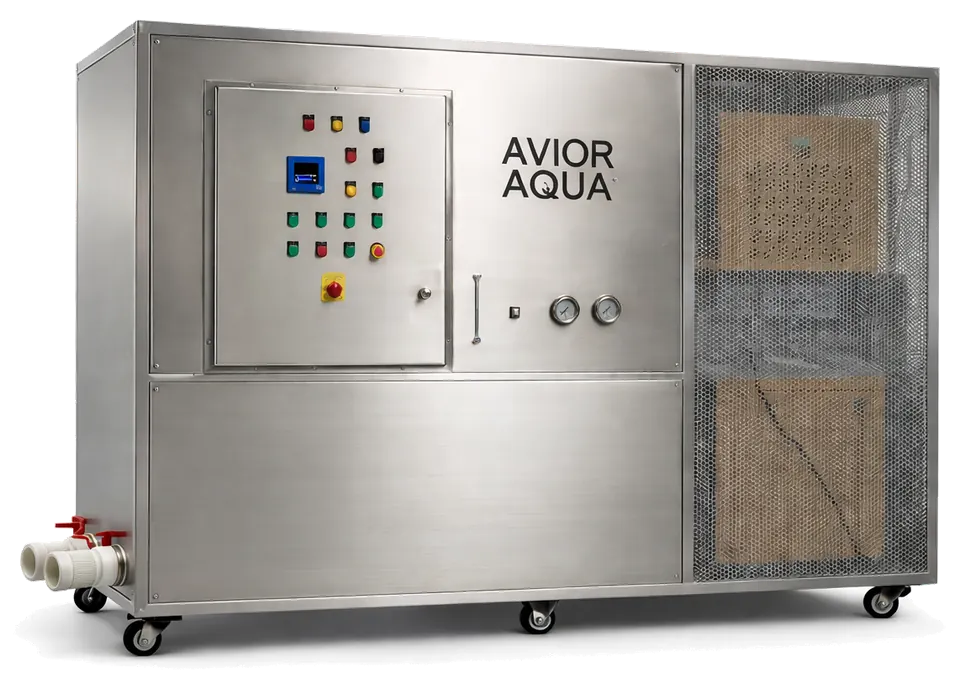
A side-stream generator sits beside the tank, not in it. A pump draws water from the tank, the generator dissolves oxygen into it as bubbles smaller than 200 nm, and the water returns to the tank. Oxygen comes from a PSA oxygen concentrator on site. Our nanobubble generators are stainless-steel skids, so connecting one usually needs suction and return pipework and a power point rather than any change to the tank itself.
Because the unit is outside the tank, the plant keeps running while it is connected, and it can be moved or resized later if the load changes.
What the independent evidence says
Nanobubble aeration has been studied for more than a decade, and the evidence is promising but uneven. A 2023 review in Water Research that analysed more than 20 pilot and full-scale cases also notes real controversies and inconsistencies in the published literature, and that most success stories are still at laboratory scale. [S1] Our guide to how nanobubbles work explains the mechanisms behind these results.
What the studies agree on:
- More oxygen reaches the water. In a lab study comparing nanobubble and coarse-bubble aeration with the same amount of air, the nanobubble reactors reached higher dissolved oxygen faster and removed about 10% more soluble COD. [S2]
- Sludge settles better. The same study found more compact sludge, easier to handle downstream, and fewer filamentous bacteria. [S2] A separate lab study on sequencing batch reactors found denser sludge that settled more easily. [S3]
- The gain comes from transfer, not storage. A 2025 study of a membrane nanobubble generator confirmed better aeration efficiency, but traced it to fast oxygen transfer at the generator rather than to nanobubbles releasing stored oxygen later. [S4] In practice this means results depend on how the generator is sized and placed, not on the bubbles alone.
Results from plants we have worked with
Each result below is quoted exactly as the plant or laboratory reported it. Follow the link for the full data, scale and conditions.
Automotive components ETP, Punjab
Two nanobubble generators with a PSA oxygen concentrator, in the equalisation and MBBR tanks.
October 2026 average against the plant's baseline, as reported by the plant: sludge down 23.3%, coagulant down 22.8%, energy down 26.9%.
One month of data.
Municipal STP, Gujarat - bench trial
A raw sewage sample of up to 100 litres, treated in 60-minute batches.
With oxygen nanobubbles, COD fell from 145.88 to 20.84 mg/L.
Bench scale only; it is not a plant result.
When nanobubbles are not the answer
Be wary of anyone who says one technology fixes every plant. Nanobubbles address oxygen. They will not fix:
- Hydraulic overload. If peak flow exceeds what the tanks and clarifier can pass, you need hydraulic capacity.
- Toxic or inhibitory effluent. If something in the effluent is killing the biology, more oxygen won't help. Find and segregate the source.
- Mechanical failures. Broken pumps, failed diffusers and blocked lines need repair first.
- Dissolved salts (TDS). Nanobubbles are not a desalination method. A plant that must cut TDS or reach zero liquid discharge still needs RO and evaporation downstream; nanobubbles can only help the biological stage ahead of them.
- Sludge that is mostly inorganic. Metal hydroxide sludge from plating or pickling lines is produced by chemistry, not biology, and oxygen does little to it.
Common ETP and STP problems
Short answers here; each links to a full guide as it is published.
- Too much sludge. Usually chemical overdosing, poor dewatering or a biological stage short of oxygen. How to reduce sludge in an ETP
- Low dissolved oxygen in the aeration tank. Check diffusers, blower output and load growth before adding capacity. Our guide to STP aeration compares the options.
- High COD at the outlet. Often load growth or low oxygen; sometimes non-biodegradable COD that needs oxidation rather than biology.
- High chemical consumption. Re-run jar tests; check pH control and equalisation.
- Smell from the STP. Almost always septic, low-oxygen zones - typically the inlet sump, equalisation tank or sludge holding tank.
What we need to assess your plant
Send what you have; we'll ask for the rest.
- Design and current flow (KLD or m³/hr)
- Recent inlet and outlet lab reports: COD, BOD, TSS, pH, temperature
- Tank list with volumes and depths, and a simple layout sketch or photos
- Existing aeration: blower or aerator type, rating and running hours
- Daily sludge quantity and chemical consumption, if logged
- Available space near the tanks and power supply
ETP and STP upgrade FAQ
Can a nanobubble generator be added without shutting the plant down?
In most layouts, yes. A side-stream unit draws water from the tank and returns it, so connection needs pipework and power, not work inside the tank. The tank keeps running while the unit is connected.
Does it replace our blowers or aerators?
Sometimes, but not by default. Most retrofits run alongside the existing aeration. Whether a plant can retire aerators depends on its oxygen demand, which is checked during the assessment.
Will it make our plant meet pollution control board norms?
No technology can promise that without knowing the plant. If your plant misses norms because the biology is short of oxygen, adding oxygen addresses the cause. If the cause is hydraulic overload, toxic effluent or non-biodegradable COD, it won't. We say which applies after looking at your data.
Where does the oxygen come from?
From a PSA oxygen concentrator installed with the generator, which separates oxygen from air on site. Some larger units can also run on a plant's existing dry compressed air supply.
Is this suitable for a ZLD plant?
It can help the biological stage that feeds the RO and evaporator, by improving treatment and settling ahead of them. It does not remove dissolved salts.
What does an upgrade cost?
It depends on flow, load and how much oxygen the plant is short of. Standard models are listed on our IndiaMART page; a plant-specific offer follows the assessment.
Related
- Nanobubble wastewater treatment
- How to reduce sludge in an ETP
- Aeration in sewage treatment plants
- Nanobubble generator range
Sources (4)
- Jia et al. (2023). Nanobubbles in water and wastewater treatment systems: Small bubbles making big difference. Water Research 245, 120613. doi.org
- Yaparatne, S. et al. (2022). Effect of air nanobubbles on oxygen transfer, oxygen uptake, and diversity of aerobic microbial consortium in activated sludge reactors. Bioresource Technology 351, 127090. doi.org
- Ahmadi, Doroodmand and Nabi Bidhendi (2022). Efficient wastewater treatment via aeration through a novel nanobubble system in sequence batch reactors. Frontiers in Energy Research 10, 884353. doi.org
- Messina and Christensen (2025). Chemical Engineering Journal 524. Open-access version, Aalborg University. vbn.aau.dk
Send us your ETP or STP data
Share your flow and latest lab results. An engineer replies within one working day with what we'd check first.
Not sure what is limiting your plant?
Send your flow and recent lab results. We will tell you what we would check first, and whether nanobubbles are worth a pilot.