Lake rejuvenation with nanobubbles
In-situ treatment that raises dissolved oxygen and cuts organic load in urban lakes and ponds, without dredging or diversion.
Why lakes fail
Urban lakes rarely fail for one reason. Organic load from sewage and runoff consumes oxygen. Nutrients feed algae, which crash overnight and use up what oxygen is left. Sludge builds on the bed and releases more load. Fish die when oxygen drops, and the lake starts to smell.
Dissolved oxygen sits at the centre of this loop. Raise it, and aerobic bacteria can break down the organic load faster and fish and other life return.
A nanobubble generator adds oxygen without churning the water or the bed, so it suits shallow urban lakes that people live beside.
How a lake project runs
Assess
We take dissolved oxygen readings through the day and depth, sample for BOD, COD, TSS and turbidity, and map inflows and depth.
Install
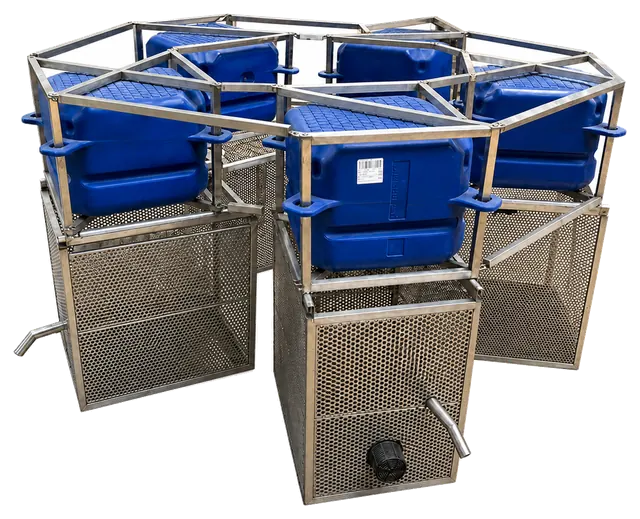
Floating frames carry the nanobubble generators, with intake cages and cabling to the shore. Units are fabricated in stainless steel.
Co-treat and control the source
We agree what else is needed: probiotic dosing, manual skimming of floating matter, and any work on inflows.
Monitor and report
Sampling at a fixed schedule, with the full numbers shared, including the ones that did not move.
Our current lake project: Rao Talao
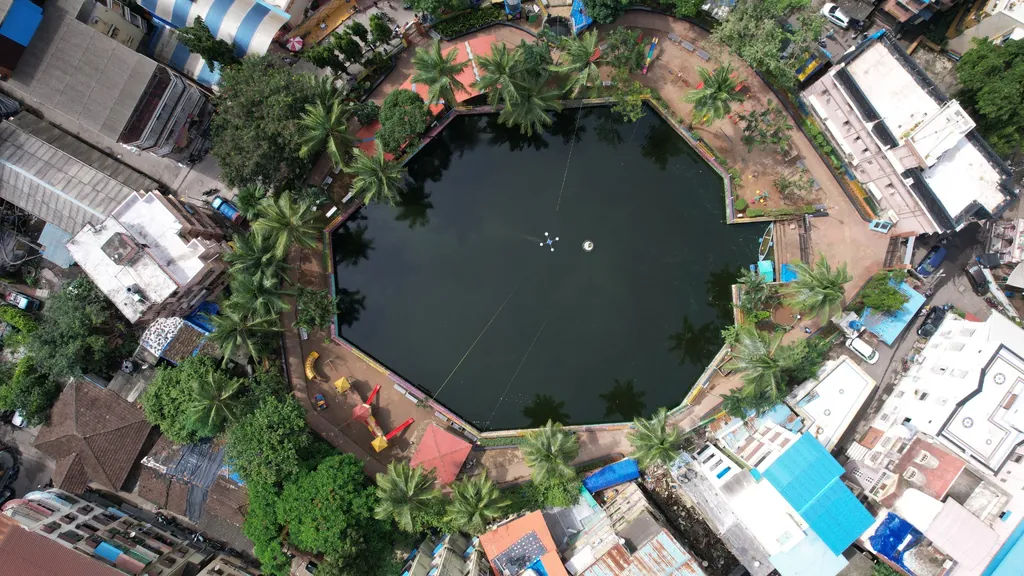
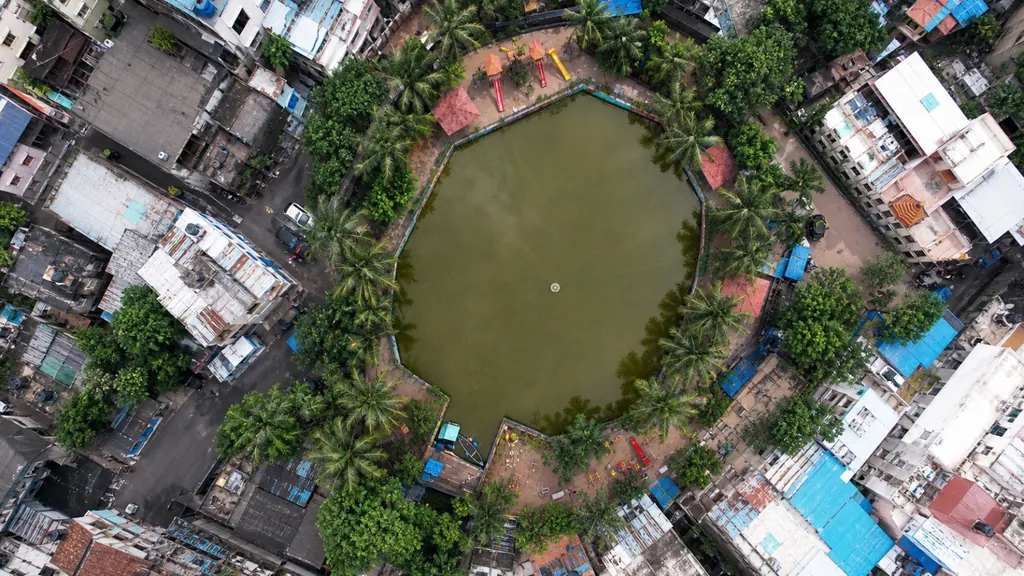
Our lake project is under way at Rao Talao in Mira Bhayandar, for Mira Bhayandar Municipal Corporation, and is funded through the AMRUT 2.0 Pitch-Pilot-Scale grant. The photographs above show the lake before the project and as it is now.
The project is ongoing, so we have no results to publish yet. We will add the measurements here, with their limits, once the project has run its course. We do not quote figures for a lake project that has not finished.
Where it fits in public programmes
Avior Aqua was one of the winners of the AMRUT 2.0 Pitch-Pilot-Scale challenge, which awards grant funding for pilot-to-scale lake remediation. Municipal lake programmes usually define their own targets and procurement routes. We can supply a measurement plan and the data from our other pilots to support your proposal; we do not promise a particular scheme outcome.
What a lake needs besides oxygen
Oxygen treats the symptom side of the problem. A lake that keeps receiving untreated sewage, stormwater carrying silt, or garbage will keep consuming oxygen faster than any unit can add it. Before a pilot we ask the owner of the lake to walk the edge with us and note:
- every inlet and outlet, and what flows through them in dry and wet weather;
- whether sewage or sullage enters directly;
- how much floating matter collects and who clears it;
- depth, bed condition and any sludge layer;
- how the lake is used: fishing, immersion, play areas, drinking-water supply or none of these.
That list decides what we recommend alongside the nanobubble generators. For one lake it can mean probiotic dosing and manual skimming. For another it could mean diverting a drain first.
What we agree before installation
We write down the targets, the sampling points, the sampling schedule, the laboratory and the date the pilot ends. We also agree what counts as success and what we will do if the targets are not met. Writing this first keeps the pilot honest for both sides.
What we monitor
Dissolved oxygen, BOD, COD, TSS and turbidity are the five parameters we track in a lake project. We add visible indicators: odour, water colour, floating algae, and the presence of fish and birds. Where possible we record oxygen through a full day, because lakes often look fine at midday and fail before dawn.
Lake rejuvenation FAQ
Can nanobubbles rejuvenate a lake on their own?
No. They address low oxygen and organic load. If untreated sewage or garbage keeps entering, the lake will keep degrading. We plan source control with you.
How long does a lake pilot take?
We plan on a pilot of around 90 days, with sampling at the start and at regular intervals so you can see the trend. We confirm the length with you once we know the lake.
What do you measure?
Dissolved oxygen, BOD, COD, TSS and turbidity at a fixed schedule, plus visible indicators such as odour, colour and fish activity.
What goes in the lake?
Floating units fitted with nanobubble generators, mounted on pontoons, with cabling to the shore. The units are submersible, so they sit in the water rather than on the bank.
Do I need dredging or diversion?
Not always. In-situ treatment combining nanobubble aeration with probiotic dosing can avoid the cost and disruption of dredging. Heavy sludge or inflows may still need separate works.
What power supply is needed?
Single-phase or three-phase depending on the unit. NanOxy 10 draws 2.6 kW on single phase. We confirm power and cable runs at assessment.
Can the units be moved or removed after the pilot?
Yes. The units are mounted on floating frames or skids, so they can be moved to another part of the lake, to another water body, or taken out. We agree in advance what happens to the equipment and the lake when the pilot ends.
Who samples the lake during a pilot?
We take samples on the agreed schedule and send them to a laboratory. Where the municipal corporation or a lake committee wants its own samples taken in parallel, we welcome that, since independent readings strengthen the result.
What happens after the pilot?
We review the data with you. If targets were met, we size units for the full water body. If not, we say so and explain why.
Which gas do you use in lakes?
Oxygen for high dissolved-oxygen duty. Where the lake also needs disinfection or oxidation, an optional NanOzone ozone unit can be added to the NanOxy.
Have a lake that needs help?
Send us its size, inflows and the problems you see. We will say whether a pilot is worth running.