
Pond cleaning: how to clear algae and keep the water clean
A pond that turns green, smells in summer or loses fish is not short of cleaning. It is short of oxygen at the bottom and carrying too many nutrients. Scooping out weed and dosing algaecide make it look better for a few weeks; the nutrients and the sludge stay, and the bloom comes back. This page explains why ponds go bad, what each common method fixes, and what keeps a pond clean for longer.
How do you clean a pond for good?
Remove what is floating, then deal with the cause: nutrients and a bottom that has lost its oxygen. When bottom water goes without oxygen, the sludge releases phosphorus that feeds algae. Cut the inflows you can, and keep oxygen at the bottom so the sludge stops feeding the bloom.
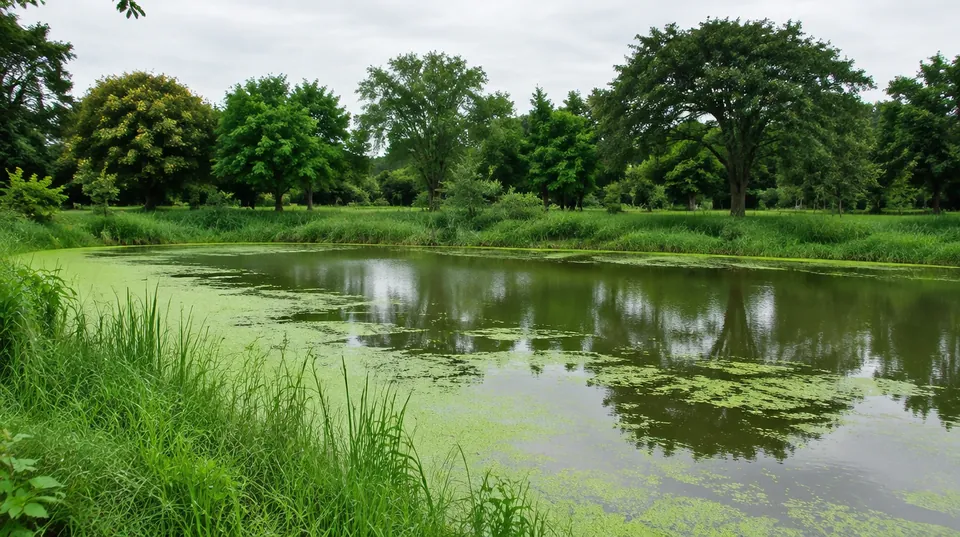
Why ponds turn green and smell
Algae grow on nitrogen and phosphorus. In a pond these come from sewage or drain inflow, rain runoff, bird droppings, and decaying leaves and fish feed, and they grow fastest in warm, still, sunlit water.
Dead algae and leaves sink and rot. The bacteria that break them down use up the oxygen at the bottom. Once the bottom water has lost its oxygen, the sludge releases phosphorus back into the water, which feeds the next bloom. That is the loop behind a pond that keeps going green however often it is cleaned. The smell comes from the same oxygen-free bottom.
Pond cleaning methods compared
| Method | What it fixes | What it leaves |
|---|---|---|
| Manual removal of weed and hyacinth | Floating plants and litter, at once | Nutrients; weed returns if the load stays high |
| Algaecide, such as copper sulphate | Visible bloom, within days | A crash in oxygen as dead algae rot, risk of fish kill; nutrients stay |
| Desilting or dredging | Nutrient-rich sediment | Draining or a dredger, silt disposal, repeats unless inflows are controlled |
| Fountain or surface aerator | Oxygen and mixing in the top layer | A deep bottom can still lose oxygen |
| Oxygen delivered to the bottom | The oxygen-free sediment that feeds the bloom | Inflows still need control; results take weeks, not days |
Most ponds need two of these: a one-time clean-up of what is floating or piled up, and a lasting fix for the oxygen at the bottom.
Does a fountain clean a pond?
A fountain or surface aerator helps, but mostly at the top. It mixes and oxygenates the upper layer and looks good, yet in a deeper pond the bottom water can still lose its oxygen, and that is where the sludge releases the nutrients that feed algae. Shallow ponds benefit most from fountains.
How nanobubbles keep oxygen at the bottom
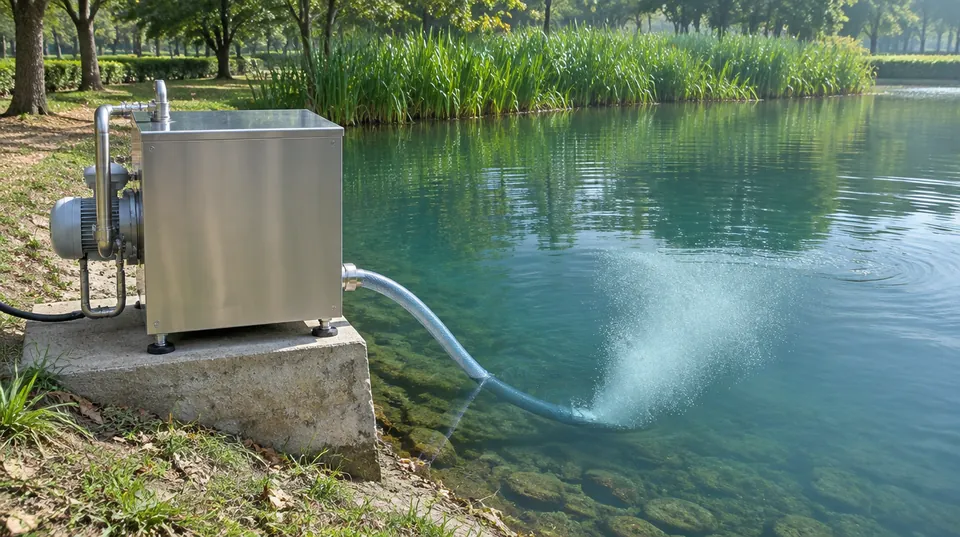
A nanobubble generator sits on the bank. A pump draws pond water, oxygen or air is dissolved into it as nanobubbles, and the water goes back into the pond. Because the bubbles are under 200 nm, they rise slowly and stay suspended, so the oxygen stays in the water longer instead of escaping at the surface.
Restoring oxygen where the water meets the sediment is the approach researchers are now studying to stop sediment feeding blooms. Nothing is dosed into the pond except the gas.
Results from municipal waterbodies
Avior has treated two municipal waterbodies in Maharashtra: a lake and a pond. At the municipal lake, the completion certificate records BOD down 53%, COD down 65%, TSS down 53% and a 100% increase in dissolved oxygen; the treatment combined nanobubble generators with bioremediation. At the municipal pond, an accredited laboratory measured turbidity falling from 94 to 1.0 NTU and suspended solids from 342 to 4 mg/L between samples taken in June and November 2026. The pond's bacteria counts did not fall, and its treatment is ongoing. Each case study shows the measurements and their limits.
How a pond project runs
- Survey: area, depth, inflows, water tests (dissolved oxygen at top and bottom, nutrients) and a look at the sludge.
- Clear what is floating and stop the inflows that can be stopped.
- Install the generator on the bank, with power and a protected intake.
- Test monthly on the same points as the survey.
- Report to the owner or the municipal body, with before and after photos.
What to send us
- Pond area and average and deepest depth
- What flows in: drains, rainwater, nothing
- Problems: green water, smell, fish deaths, floating weed, mosquitoes
- What has been tried, and when
- Power available near the bank
- Who owns and maintains the pond: society, municipal body, temple trust, resort
Pond cleaning: FAQ
How do I remove algae from a pond without harming fish?
Avoid killing a heavy bloom all at once: as the dead algae rot they use up the oxygen, and fish can die. Remove floating weed by hand, cut nutrient inflows, and raise oxygen at the bottom so the sludge stops releasing phosphorus. The bloom then fades over weeks.
How often should a pond be desilted?
Only when the silt is reducing depth or capacity. Desilting removes nutrient-rich sediment but needs draining or a dredger and disposal of the silt, and it repeats unless the inflows are controlled. Keeping the bottom oxygenated slows the build-up of black, smelly sludge.
How do you control water hyacinth?
Remove it mechanically or by hand before it covers the surface, and dispose of it away from the water. It returns as long as the nutrient load stays high, so pair removal with the inflow and oxygen measures above.
Green water or smell in your pond?
Tell us the pond's size, depth, what flows into it and what you have tried. We reply within one working day.
Green water or smell in your pond?
Send the pond's size, depth and what flows into it. An engineer will tell you whether oxygen at the bottom is the missing piece, and whether a pilot is worth running.