
Nanobubble water for hydroponics
Higher germination, faster seedlings and steadier crops through the summer heat, from a NanOxy 5 at Rucon Hydroponics.
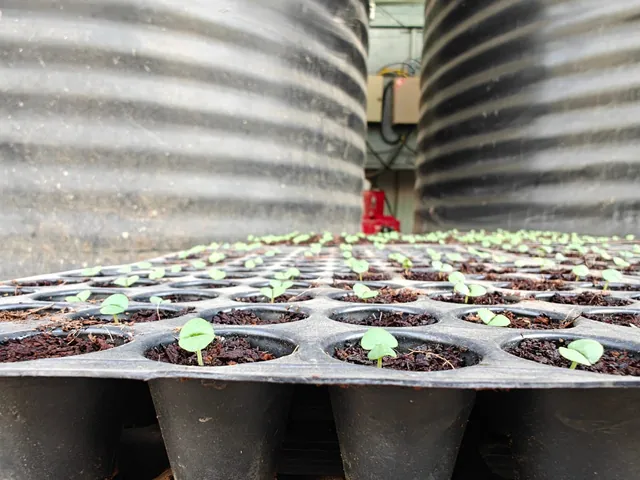
Stronger starts from the first week
Rucon Hydroponics put nanobubble-treated water side by side with regular water across mini cucumber and three cherry tomato varieties. Germination came out higher in every crop. The oval red cherry tomato moved the most, from 50% to 68%.
| Crop | Nanobubble water | Regular water | Difference |
|---|---|---|---|
| Mini cucumber | 83% | 73% | +10 points |
| Red cherry tomato, oval | 68% | 50% | +18 points |
| Red cherry tomato, round | 86% | 80% | +6 points |
| Yellow cherry tomato, round | 84% | 76% | +8 points |
| Average | 80.25% | 69.75% | +10.5 points |
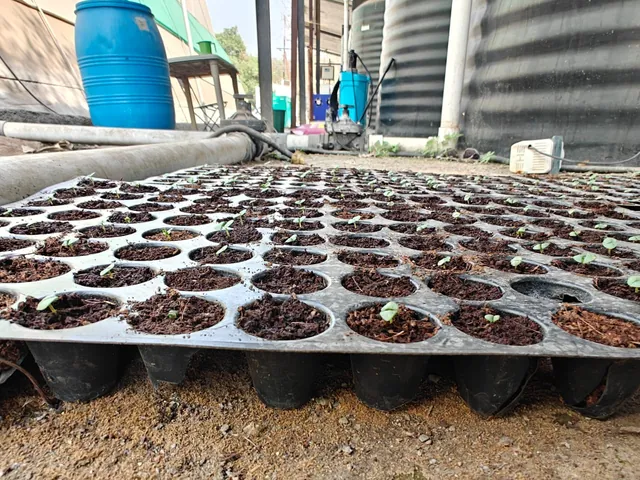
Faster, sturdier seedlings
Basil seedlings grown on nanobubble water came up around 25% larger than the regular-water trays, with seed leaves more fully open and longer stems. The farm team also reported stronger stems and shorter spacing between nodes.
Sturdier, quicker seedlings mean fewer gaps in the tray and a shorter wait to transplant.
Basil through peak summer
When summer temperatures peaked, the regular-water basil batch was lost. The nanobubble batch came through comparatively less affected, according to the farm team, which is the resilience a heat-exposed farm needs.
Microgreens that weigh more
In a microgreens trial of mustard, radish, red amaranth and sunflower, the nanobubble batch was reported slightly heavier at harvest.
What it adds to a hydroponic system
- Higher germination. More of what you sow becomes a plant.
- Faster early growth. Seedlings reach transplant sooner.
- Heat resilience. Crops held up where the control batch did not.
- Heavier microgreens. More weight per harvest.
- Simple to run. A side-stream skid beside your reservoir, with no change to your nutrient programme.
The Rucon trial ran on a NanOxy 5 serving roughly 200 litres of storage: 1.8 kW on single-phase 220 V, with 5 LPM of rated gas flow and 7 m³/hr of water flow. See the NanOxy range.
Hydroponics FAQ
Which crops did the hydroponics trial cover?
Mini cucumber, three cherry tomato varieties (red oval, red round and yellow round), basil, and a microgreens batch of mustard, radish, red amaranth and sunflower.
How much higher was germination?
Higher in every crop tested. Across the four germination trials the average was 80.25% with nanobubble water against 69.75% with regular water, a gain of 10.5 percentage points.
Does it change my nutrient programme?
No. The unit treats the water that feeds the system, so your nutrient recipe and schedule stay as they are.
Which unit was used?
A NanOxy 5, an oxygen-fed nanobubble generator with 5 LPM of rated gas flow and 7 m³/hr of water flow. See the NanOxy specifications.
How is it installed?
As a side-stream on the nutrient or irrigation reservoir: water is drawn off, dosed with oxygen nanobubbles and returned. The unit is a floor-standing skid on castors, so it can move between tanks.
How do I get started?
Tell us the crops you grow, your reservoir size and your flow, through the contact form. We reply within two working days with the unit we recommend.
Growing hydroponically?
Tell us your crops, reservoir size and flow. We recommend the unit.