
Nanobubbles for ETPs: what they do in effluent treatment
Nanobubbles are gas bubbles smaller than 200 nm. They are small enough to stay suspended in water instead of rising to the surface. In an effluent treatment plant they are a way to get oxygen, or ozone, into the effluent quickly and keep it there. This page explains where that helps an ETP, where it does not, what the evidence shows so far, and how to test it on your own plant.
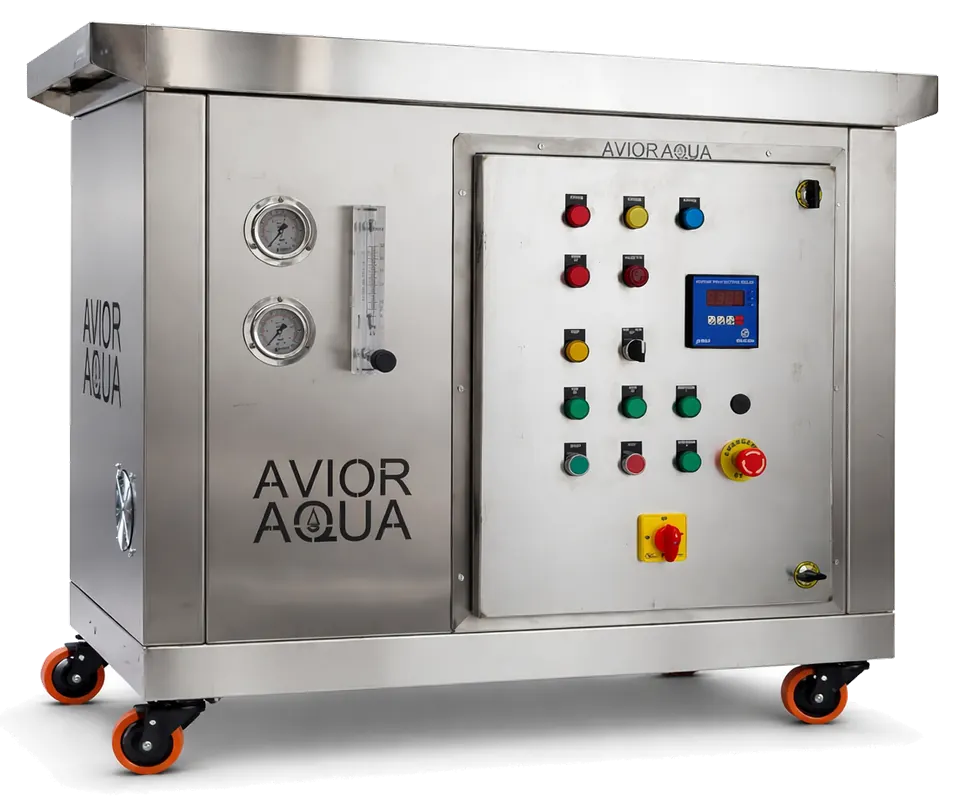
Can nanobubbles be used in an ETP?
Yes. In effluent treatment plants, nanobubble generators are mostly used to add oxygen to the equalisation and biological tanks, and sometimes ozone for colour, odour or hard-to-degrade COD. They help when oxygen is what limits treatment. They do not fix hydraulic overload or toxic shock loads, so a plant is assessed first.
What nanobubbles do in an ETP
Three effects matter in an effluent plant.
Faster oxygen transfer. A nanobubble generator dissolves gas into the water it handles very efficiently. A 2025 study traced the better aeration efficiency to fast oxygen transfer at the generator itself, not to bubbles storing oxygen and releasing it later. [S1] In practice, dissolved oxygen can be raised in a tank without adding diffusers or tank volume.
Healthier biology and better settling. In a lab study using the same air supply, nanobubble reactors reached higher dissolved oxygen faster than coarse-bubble reactors. They also removed about 10% more soluble COD and produced more compact sludge with fewer filamentous bacteria. [S2] Another lab study found denser sludge that settled more easily. [S3]
Less excess sludge. Higher oxygen inside activated sludge flocs is linked to lower excess sludge production. [S4] A pilot-scale study raised reactor dissolved oxygen from about 2 to 4.5 mg/L with nanobubbles and saw less excess sludge. [S5]
A 2023 review of more than 20 pilot and full-scale cases says most success stories are still at laboratory scale. [S6] That is why plant data, below, matters more than lab results.
Where nanobubbles fit in an ETP, stage by stage
| ETP stage | Common problem | What nanobubbles can do | Gas |
|---|---|---|---|
| Equalisation tank | Effluent turns septic and smells; load and pH swing | Keep the tank aerobic so it does not go septic before biological treatment | Oxygen or air |
| Biological stage (ASP, MBBR, SBR) | Dissolved oxygen falls below target at peak load | Raise dissolved oxygen without new tanks or diffusers; may improve settling | Oxygen |
| Secondary clarifier | Poor settling, solids carry-over | Indirect: better-settling biomass from the stage before | None at this stage |
| Tertiary or polishing | Residual colour, odour or COD | Oxidation with ozone nanobubbles, after a test on your effluent | Ozone |
| Treated water tank | Odour and regrowth during storage | Keep stored water fresh; ozone where reuse quality is the aim, after testing | Oxygen or ozone |
| Sludge handling | Too much sludge to dispose of | Upstream effect only: less excess sludge from the biological stage | None at this stage |
To see how a side-stream generator connects to a working tank without civil work, read our guide to ETP and STP upgrade. For the sludge side, see how to reduce sludge in an ETP.
Oxygen, ozone or air: which gas does an ETP need?
Most ETPs need oxygen, because the biological stage is where treatment runs short. Ozone is a strong oxidant, used for colour, odour and COD that bacteria cannot break down, and it is chosen only after testing your effluent. Air is the simplest feed where only a small oxygen boost is needed.
- Oxygen: a PSA oxygen concentrator beside the generator supplies it, and some larger units can use a plant's dry compressed air instead. Our NanOxy generators run on oxygen.
- Ozone: generated on site and dissolved as nanobubbles by our NanOzone generators. Because effluents react very differently to ozone, we test a sample before proposing it.
- Air: our NanoAer generators use ambient air.
Some plants combine two feeds, for example oxygen in the biological stage and ozone for polishing.
Which industrial effluents suit nanobubbles?
Nanobubbles suit effluents whose treatment is biological and limited by oxygen, and some effluents that need oxidation. The table is a starting point, not a promise; every effluent is characterised before we propose anything. For each industry, it lists what usually limits the ETP, where nanobubbles may help and what to test first.
| Industry | What usually limits the ETP | Where nanobubbles may help | Test first for |
|---|---|---|---|
| Distillery and brewery | High organic load; oxygen demand peaks after anaerobic stages | Oxygen in aerobic polishing after the anaerobic stage | Colour that biology does not remove |
| Food, dairy, meat and poultry processing | Fats and high BOD; septic, odorous equalisation | Oxygen in equalisation and aeration; odour control | Fat and oil removal ahead of biology |
| Automotive and metal finishing | Chemical treatment; oily, variable streams | Equalisation and the biological stage where one exists | Toxic or inhibitory metals and chemicals |
| Textile and dyeing | Colour and hard-to-degrade COD | Ozone for colour; oxygen in the biological stage | Colour removal on a sample |
| Pharmaceutical and chemical | Refractory or inhibitory COD | Ozone pre-treatment or polishing in some cases | Whether ozone makes the COD biodegradable |
What nanobubbles cannot fix in an ETP
Nanobubbles add oxygen or ozone. They do not add tank volume, so they cannot fix hydraulic overload. They do not neutralise toxic shock loads, and they do not remove dissolved salts (TDS). If your plant fails norms for those reasons, a different fix is needed, and we will say so after reviewing your data.
No technology can promise pollution control board compliance without knowing the plant. Operators should check their limits in their state pollution control board consent.
Evidence from working plants
Industrial ETP, first full month
Two 5 HP nanobubble generators were installed in the equalisation and MBBR tanks of a working industrial ETP. In October 2026, the first full month after installation, the plant reported these figures against its baseline:
- sludge 150 to 115 kg/day;
- coagulant 14 to 10.81 kg/day;
- energy 260 to 190 kWh/day.
Caustic soda dosing stopped apart from a single dose.
Sewage bench trial
On a raw-sewage sample of up to 100 litres treated in 60-minute batches, oxygen nanobubbles took COD from 145.88 to 20.84 mg/L. This was sewage, not industrial effluent, and bench scale, not a plant.
How do you test nanobubbles on your ETP?
Start with your plant data, not with equipment. We look at flow, inlet and outlet COD and BOD, dissolved oxygen in each tank, sludge generated and chemical use. That tells us whether oxygen is your limit. If it is, a side-stream unit goes on one tank, and the same figures are compared before and after.
- Share your flow sheet, consent limits and recent lab results.
- We identify the bottleneck and the stage where nanobubbles would act.
- A side-stream generator is connected to that tank, with no civil work in most layouts.
- Before-and-after figures are compared over an agreed period.
- You decide on the full installation from your own plant's figures.
For the full list of what to measure, see nanobubble wastewater treatment.
Nanobubbles for ETP: FAQ
Is a nanobubble generator the same as a fine-bubble diffuser?
No. A diffuser releases bubbles that rise through the tank and burst at the surface. A nanobubble generator dissolves gas into a side stream and returns water carrying very fine bubbles that stay suspended. The two often work together: the existing aeration keeps running, and the generator adds oxygen where it falls short.
Can ozone nanobubbles reduce COD in an ETP?
Sometimes. Ozone can break down colour and some hard-to-degrade COD, or make it easier for bacteria to treat. The result depends heavily on the effluent, so we test a sample before proposing ozone.
Will nanobubbles help with ETP odour?
Often, when the odour comes from an equalisation tank or sump turning septic. Keeping that water aerobic removes the conditions that produce the smell. Odour from other sources, such as sludge storage or chemical dosing, needs its own fix.
How soon do results show?
In the industrial ETP above, results were reported for the first full month after installation. Every plant differs, so the period is agreed with you before the unit is connected.
What does a nanobubble system for an ETP cost?
It depends on your flow, oxygen demand and which gas you need. See the price question on our nanobubble generator page, or share your plant data for a sized quote.
Related
- ETP and STP upgrade without new civil work
- How to reduce sludge in an ETP
- Industrial ETP case study
- Aeration in sewage treatment plants
- How nanobubbles work
Sources (6)
- Messina and Christensen (2025). Chemical Engineering Journal 524. Open-access version, Aalborg University. vbn.aau.dk
- Yaparatne, S. et al. (2022). Effect of air nanobubbles on oxygen transfer, oxygen uptake, and diversity of aerobic microbial consortium in activated sludge reactors. Bioresource Technology 351, 127090. doi.org
- Ahmadi, Doroodmand and Nabi Bidhendi (2022). Efficient wastewater treatment via aeration through a novel nanobubble system in sequence batch reactors. Frontiers in Energy Research 10, 884353. doi.org
- Abbasi, Dullstein and Räbiger (2000). Minimization of excess sludge production by increase of oxygen concentration in activated sludge flocs; experimental and theoretical approach. Water Research 34, 139-146. doi.org
- Ahmadi et al. (2018). Journal of Advances in Environmental Health Research 6, 225-233. doi.org
- Jia et al. (2023). Nanobubbles in water and wastewater treatment systems: Small bubbles making big difference. Water Research 245, 120613. doi.org
Running an ETP that is short of oxygen?
Share your flow, COD and the tank where oxygen runs short. We reply within one working day.
Not sure whether nanobubbles fit your ETP?
Send your flow sheet and recent lab results. An engineer will tell you which stage we would look at first, and whether a test is worth running.