
Textile and dyeing ETPs: ozone nanobubbles for colour and COD
Colour is the problem that defines a textile ETP. Biological treatment removes much of the organic load, but many dyes pass through it, along with COD that bacteria cannot break down. Ozone is one of the few treatments that attacks both. Fine bubbles make it work faster. This page explains where ozone nanobubbles fit in a textile ETP, what the research shows, and what ozone cannot do.

Do ozone nanobubbles remove colour from textile effluent?
Often, but it depends on the dyes. Ozone breaks the chemical groups that give dyes their colour, and fine bubbles move ozone into water faster. Results differ between dye classes, so every textile effluent is tested on a sample before ozone is proposed. Ozone does not remove dissolved salts.
For the general picture, see our guide to nanobubbles for ETP.
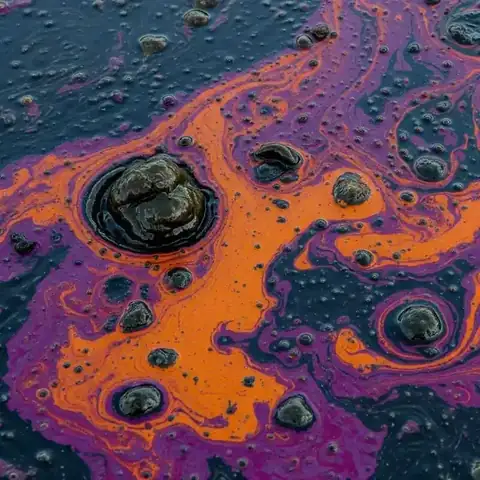
Why textile ETPs struggle with colour and COD
Textile dyeing effluent carries colour and high dissolved salts, and many textile ETPs end in RO or zero liquid discharge. Biological treatment removes the biodegradable load, but leaves two things behind:
- Colour, from dyes that resist bacteria.
- Hard-to-degrade COD, which keeps outlet COD above limits even when the biology is healthy.
Ozone attacks the chemical groups that give dyes their colour. It can also break down part of the remaining COD, or make it easier for bacteria to treat.
Why fine bubbles matter for ozone
Ozone only works once it is dissolved, and ordinary bubbles rise out of the tank before much of it does. Smaller bubbles stay in the water longer and dissolve more of their gas.
The research is consistent on this:
- Microbubbles, real textile wastewater: 80% colour removal took about 140 minutes against about 280 minutes with a conventional bubble contactor. Mass transfer was 1.6 to 2.7 times higher and COD removal 20% higher. [S1] Those were microbubbles; nanobubbles are smaller still.
- Ozone nanobubbles, primary textile effluent: a 2023 study produced ozone nanobubbles of about 217 nm and used them to treat it. [S2]
- Ozone nanobubbles, real textile wastewater: a 2025 study found them effective, and found oxygen nanobubbles the most stable over one year. [S3]
Where ozone and oxygen nanobubbles fit
| ETP stage | What goes wrong | What nanobubbles can do | Gas |
|---|---|---|---|
| Equalisation | Septic, odorous, mixed streams | Keep the tank aerobic | Air or oxygen |
| Biological stage | Too little oxygen during dyeing peaks | Lift dissolved oxygen in the existing basin | Oxygen |
| After biological treatment | Colour and COD above limits | Ozone polishing; usually the most economical point for ozone | Ozone |
| Ahead of RO | Organics that foul membranes | Ozone treatment, then remove residual ozone before the membranes | Ozone |
| Raw effluent | Very strong colour and load | Possible, but ozone demand is much higher; tested case by case | Ozone |
Ozone and oxygen units both connect on a side stream; see ETP and STP upgrade for the layout.
Is ozone safe to use at an ETP?
Yes, when the system is designed for it. Ozone is harmful to breathe, so ozone systems pass their off-gas through an ozone destructor, and the area is ventilated. Any ozone left in the water must also be removed before RO membranes, which it damages. Both are standard design steps.
What ozone nanobubbles cannot do
- Remove dissolved salts. Ozone treats colour and organics, not TDS, so RO or evaporation still handles salts.
- Promise a colour limit before a test. Results differ between dye classes.
- Replace biological treatment. Using ozone on the full biodegradable load wastes it.
How we test your effluent
We start with a sample, not a quotation:
- Send a sample from the point where colour is a problem, usually after biological treatment.
- We treat it with ozone nanobubbles and measure colour and COD before and after.
- The test shows whether ozone is worth installing and roughly how much is needed.
- If it is, a side-stream unit is connected at that point in the plant.
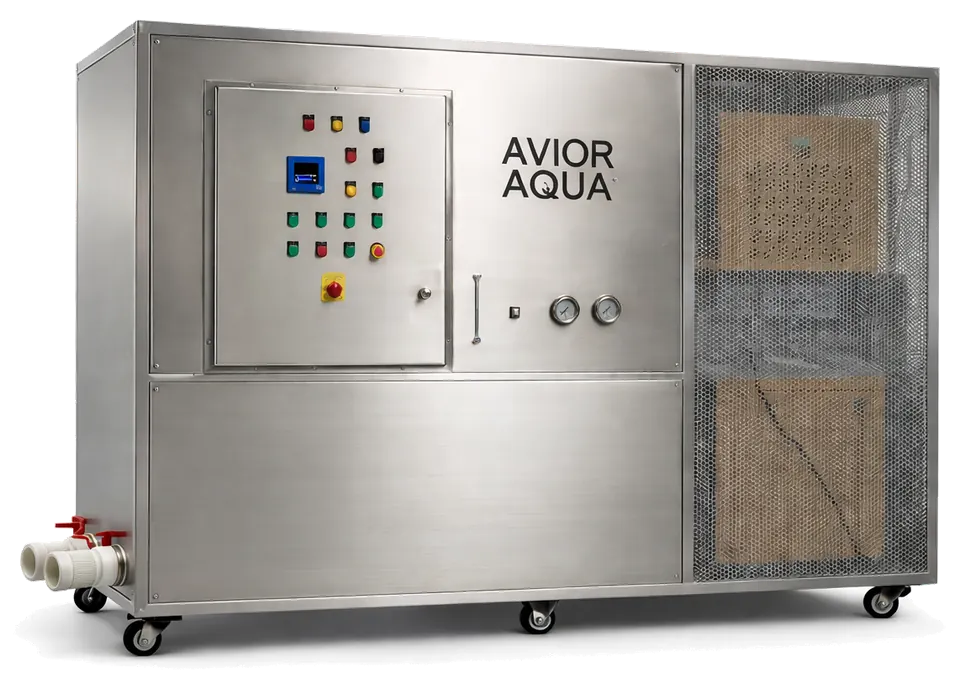
Our NanOzone generators produce the ozone on site and dissolve it as nanobubbles.
Textile ETP: FAQ
Can ozone replace chemical decolourants?
Sometimes, in part or in full. It depends on your dyes and your colour limit, which is why a sample is tested first.
Does ozone help a zero liquid discharge textile plant?
It can remove colour and organics ahead of RO and evaporators. Residual ozone must be removed before the membranes, and ozone does not reduce dissolved salts.
Will ozone reduce COD as well as colour?
Partly. Ozone breaks down some hard-to-degrade COD and can make the rest easier for bacteria to treat. How much depends on the effluent.
Related
Sources (3)
- Enhanced ozonation of textile wastewater by microbubbles. Proceedings of the 6th European Congress of Chemical Engineering (ECCE-6), Copenhagen, 2007. skoge.folk.ntnu.no
- Hutagalung et al. (2023). Combination of ozone-based advanced oxidation process and nanobubbles generation toward textile wastewater recovery. Frontiers in Environmental Science 11, 1154739. doi.org
- Varoutoglou et al. (2025). Nanobubbles of Oxygen, Air, and Ozone Gas for the Degradation of Reactive and Cationic Dyes from Wastewater. Langmuir 41(32), 21576-21590. doi.org
Struggling with colour in your textile ETP?
Tell us your dyes, flow and where colour is measured. We can test a sample with ozone nanobubbles. We reply within one working day.
Not sure whether nanobubbles fit your ETP?
Send your flow sheet and recent lab results. An engineer will tell you which stage we would look at first, and whether a test is worth running.