
RO membrane fouling: causes, cleaning and prevention
An RO plant rarely fails at once. Permeate flow slips a few percent, the pressure drop creeps up, the pumps work harder, and cleaning comes round sooner each time. By the time output has clearly fallen, the membranes may be past full recovery. This page explains the four kinds of fouling, the readings that tell you when to clean, how pretreatment protects the membranes, and what research shows micro-nanobubbles can add.
What causes RO membrane fouling?
Four things build up on RO membranes: mineral scale such as calcium carbonate and silica, colloids such as silt and iron, biofilm, and organic matter. Each needs a different cleaning, so identify the type from your readings and feed analysis before choosing the chemical.
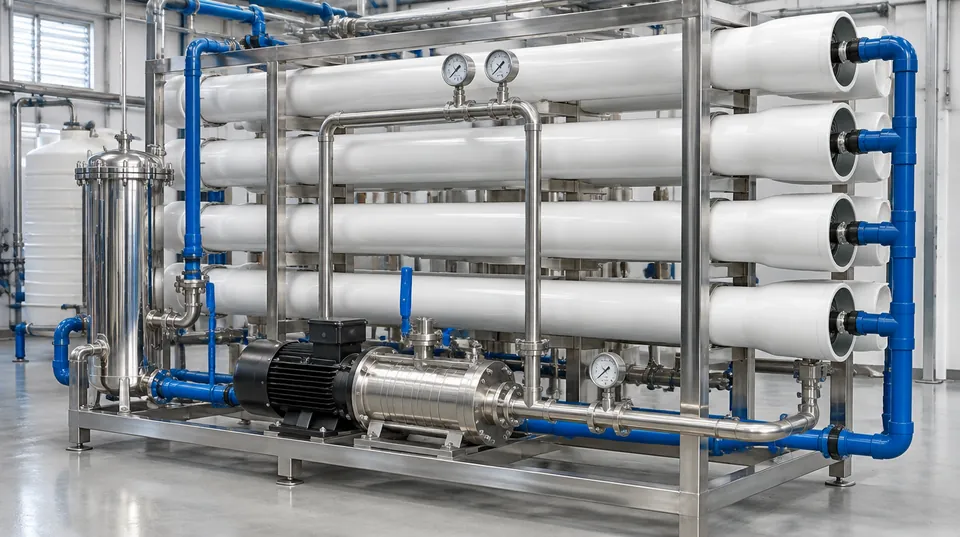
The four kinds of RO fouling
| Type | What builds up | Where it shows first | Typical sign |
|---|---|---|---|
| Scaling | Calcium carbonate, calcium sulphate, silica | Last stage, where the water is most concentrated | Salt passage rises, last-stage flow falls |
| Colloidal | Silt, clay, iron | First stage, lead elements | Pressure drop rises in stage one |
| Biofouling | Bacteria and their slime | Often the first stage | Pressure drop rises quickly, often in warm months |
| Organic | Natural organic matter, oil | Throughout | Gradual flow loss |
Most plants see a mix. The feed water analysis and where in the plant the loss appears point to the main one.
When should RO membranes be cleaned?
Clean when normalised permeate flow has fallen by 10 to 15%, normalised pressure drop has risen by 10 to 15%, or salt passage has risen noticeably. Use normalised figures, because raw permeate flow changes with water temperature alone. Cleaning early recovers more than cleaning late.
How RO membranes are cleaned
- Acid cleaning for scale and metal oxides.
- Alkaline cleaning for organics and biofilm; with biofouling it usually comes first.
- Flush and return to service, then log normalised flow, pressure drop and salt passage to see how much was recovered.
If each clean recovers less than the last, or the interval keeps shrinking, the cause is upstream, in pretreatment.
RO pretreatment: protecting the membranes
Most fouling is decided before the water reaches the membranes. Silt density index (SDI) measures how fast feed water plugs a 0.45 micrometre filter. Most membranes need SDI below 5, and below 3 is the usual target. Multimedia or ultrafiltration takes out colloids, antiscalant holds back scale, and control of chlorine and biological growth protects against biofouling.
Keep a pretreatment log alongside the RO log: SDI, antiscalant dose and feed temperature. Most repeated fouling can be traced to a drift in one of them.
Can micro-nanobubbles reduce RO fouling?
Laboratory work says they can help. Air micro-nanobubbles have been tested as a chemical-free way to hold back scale in seawater RO. In another study, micro-nanobubbles in the RO feed left a loose fouling layer of colloids that a clean-in-place removed easily. In nanofiltration, continuous dosing raised membrane flux by 6.3%.
These were laboratory results, and Avior has not yet run an RO plant pilot. The way to test it is a side-stream generator on the RO feed tank, run against a logged baseline on one train.
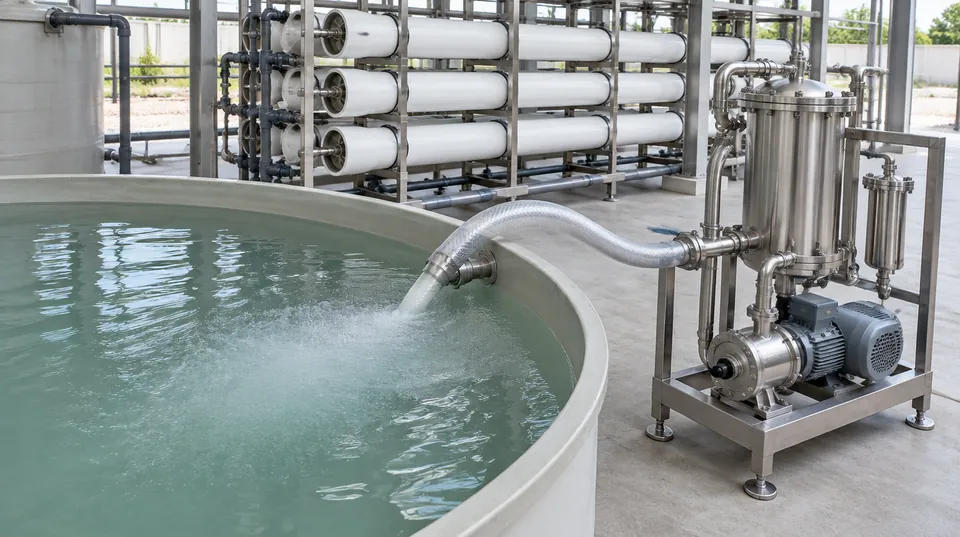
How a pilot would run
- Baseline: four weeks of normalised flow, pressure drop, salt passage, SDI and cleaning dates.
- Install the generator on the feed tank or break tank of one RO train.
- Run with pretreatment and antiscalant unchanged at first.
- Compare the rate of flow loss and the time between cleanings against the baseline and against an untreated train.
What to send us
- RO capacity, number of trains and stages, membrane type
- Feed water source and analysis, including SDI, hardness, silica, iron
- Pretreatment in place and antiscalant used
- Cleaning frequency and what each clean recovers
- Normalised data, if your system logs it
RO membrane fouling: FAQ
How often should RO membranes be cleaned?
When the readings say so, not by the calendar: a 10 to 15% fall in normalised permeate flow, a 10 to 15% rise in normalised pressure drop, or a noticeable rise in salt passage. If cleanings are needed more often than every few months, look at pretreatment.
What SDI is acceptable for RO?
Most RO membranes need feed water with an SDI below 5, and below 3 is the usual target. A rising SDI means colloids are getting through pretreatment and will foul the first stage.
Does Avior have an RO installation?
Not yet. The research on micro-nanobubbles and RO is laboratory work. We offer a measured pilot on one RO train, logged against your own baseline, so the decision rests on your plant's data.
Cleaning your RO membranes too often?
Tell us the RO capacity, feed water source, SDI and how often you clean. We reply within one working day.
Cleaning your RO membranes too often?
Send the RO capacity, feed water analysis and cleaning history. An engineer will tell you what we would check first, and whether a pilot is worth running.