
Nanobubble water for concrete mixing: what the studies show
Mixing water is now an engineered ingredient. Concrete and mortar mixed with nanobubble water came out stronger, less porous and less absorbent, and easier to place. A US patent covers gas entrainment into concrete through nanobubbles, upstream of the product mould. This guide sets out the results and how nanobubble water is fed into an RMC or precast plant.
Does nanobubble water make concrete stronger?
Yes. Mortar mixed with hydrogen nanobubble water was 6.41% to 11.22% stronger in compression and 2.25% to 13.48% stronger in bending after 28 days. Across studies, micro-nanobubbles cut concrete porosity by 17% and 28-day water absorption by 20%, which makes the concrete denser and more durable.
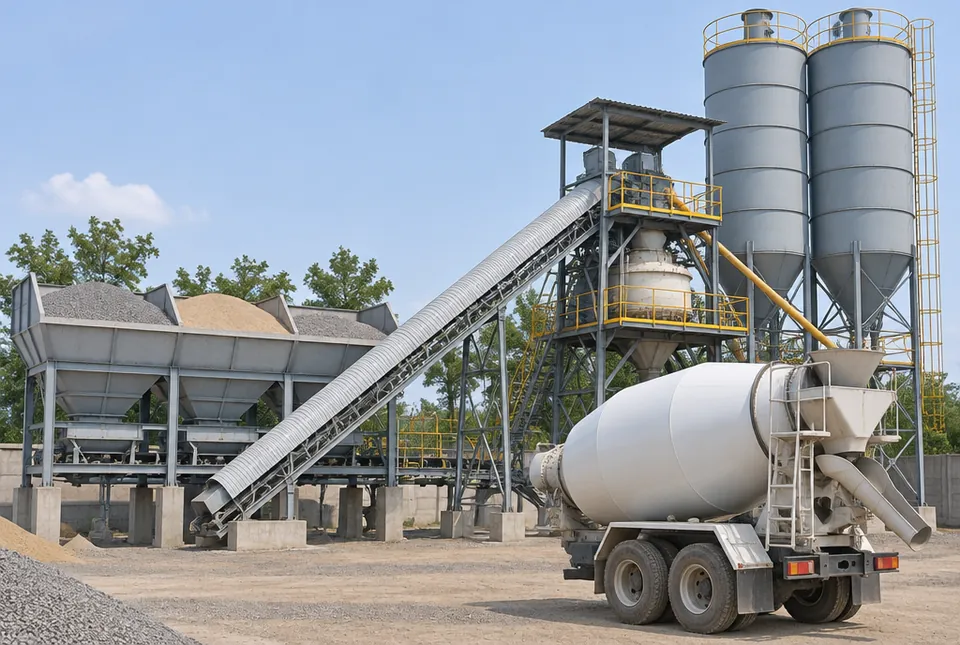
What nanobubble mixing water does
Three results recur across the published work: stronger mortar, concrete that is easier to place, and a denser, less absorbent matrix. Mortar made with hydrogen nanobubble water gained 3.7% to 15.79% in compressive strength at every curing age tested, and concrete made with hydrogen nanobubble water of about 150 nm was 50% more workable.
| Property | Result | Source |
|---|---|---|
| Compressive strength (mortar, 28 days) | +6.41% to +11.22% | Materials 14(11), 2021 |
| Compressive strength (mortar, each age) | +3.7% to +15.79% | Materials 14(8), 2021 |
| Workability (concrete) | +50% | Case Studies in Construction Materials, 2024 |
| Workability (cementitious composites) | +3% to +22% | J. Korea Inst. Struct. Maint. Insp., 2021 |
| Porosity | -17% | Nanotechnology Reviews, 2024 |
| Water absorption (28 days) | -20% | Nanotechnology Reviews, 2024 |
| Resistance to salt ingress and freeze-thaw | Improved | Nanotechnology Reviews, 2024 |
Why denser concrete lasts longer
Lower porosity and lower water absorption mean less water and salt reach the steel. That is what drives corrosion and freeze-thaw damage, both of which micro-nanobubbles improved. For precast and RMC producers, it means more durable concrete from the same mix design.
How nanobubble water reaches the mixer
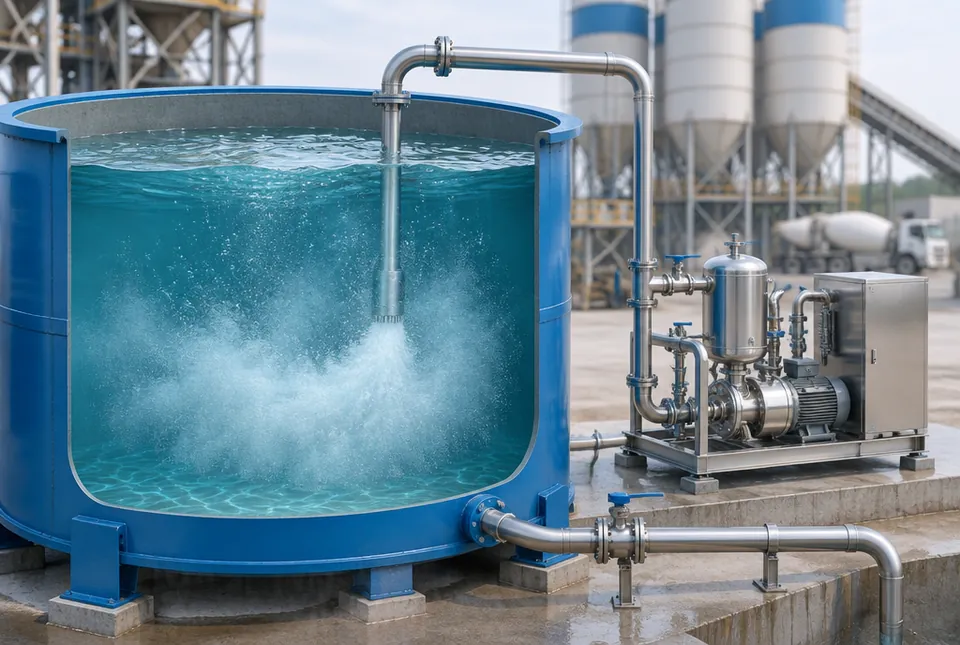
An Avior generator skid sits on the plant's water tank and fills it with nanobubble water. The batching system draws mixing water as usual, so cement, aggregates, admixtures and controls stay the same. Gas entrainment into concrete through nanobubbles, upstream of the product mould, is patented in the US. Mixing water continues to meet IS 456, and plants confirm each grade with their normal cube tests. See our nanobubble generators.
What to send us
- Plant type (RMC or precast) and daily output
- Main mix grades and admixtures
- Water source, storage and quality test results
- What you want to improve: early strength, workability or consistency
Concrete mixing water: FAQ
What water can be used for mixing concrete?
In India, mixing water must meet IS 456, and drinking-quality water is generally accepted. Any new water source or treatment is proven on trial mixes first.
Does nanobubble water improve workability?
Yes. Hydrogen nanobubble water improved concrete workability by 50%, and nano-bubble water improved the workability of cementitious composites by 3% to 22%.
Does nanobubble water make concrete more durable?
Yes. Micro-nanobubbles cut porosity by 17% and 28-day water absorption by 20%, and improved resistance to salt ingress and freeze-thaw.
Is nanobubble water used in precast production?
Yes. A US patent covers gas entrainment into concrete through nanobubbles, upstream of the product mould. In a precast plant the nanobubble water goes in with the mixing water, so the moulds, curing and controls stay the same.
Running an RMC or precast plant?
Tell us your daily output, mix grades and water source. We reply within one working day.
Running an RMC or precast plant?
Send your daily output, mix grades and water source. An engineer will tell you how a nanobubble skid connects to your water tank.