
CBG plant biogas yield: how to get more gas from the same feed
India's CBG programme has turned biogas from a village technology into an industry. SATAT, launched in 2018, set out to build 5,000 compressed biogas plants, and new plants are being commissioned on paddy straw, press mud, dung and food waste. After commissioning, most owners face the same question: why is the plant making less gas than the design said, and what can be done without a new digester? This page sets out the usual causes, the checks that find them, and what the research says about nanobubble water.
How can a CBG plant get more biogas from the same feed?
Find what is limiting the digester first: feed that is hard to digest, overloading, temperature swings, poor mixing, foaming or inhibitors. Then fix it in order of cost. Pre-treating straw helps most where feed is the limit, and lab studies report more methane when nanobubble water is added.
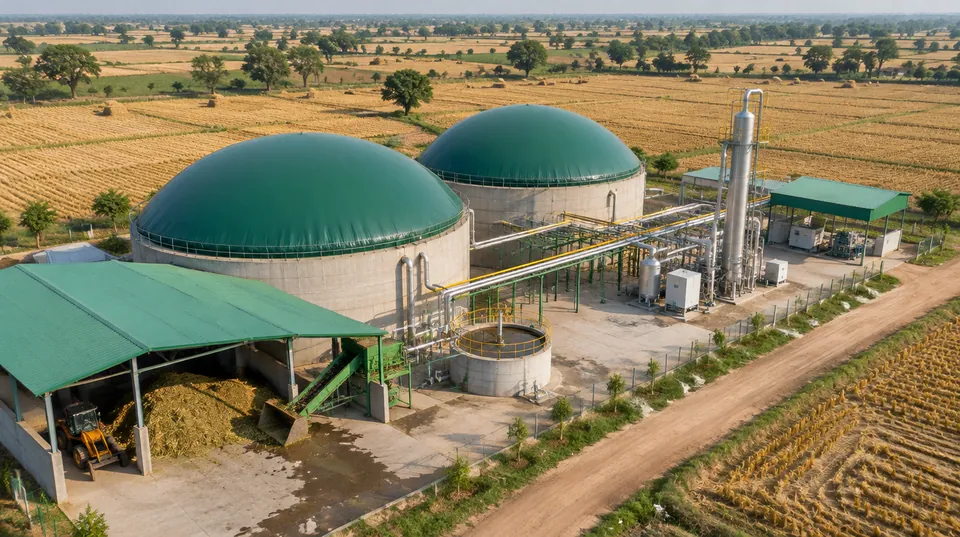
Why plants make less gas than designed
| Cause | Typical sign | First check |
|---|---|---|
| Hard-to-digest feed, such as lignin-rich straw | Gas per tonne low from day one | Feed analysis; pre-treatment in use? |
| Overloading | Gas falls after feed is raised; VFA rising | Organic loading rate against design |
| Temperature swings | Gas drops on cold nights or in winter | Digester temperature log |
| Poor mixing | Scum, settled solids, short-circuiting | Mixer run hours; scum thickness |
| Foaming | Foam in gas lines, gas meter spikes | Feed changes before the foam began |
| Inhibitors: ammonia, sulphide | Gas falls despite steady feed | Ammonia and H2S readings |
Reading the digester before it sours
Most digesters run with pH between about 6.8 and 7.5. pH is a late warning, though. The ratio of volatile fatty acids to alkalinity rises first, while gas output still looks normal. A plant that logs that ratio with gas per tonne of feed sees trouble weeks before the gas meter does, and can cut feed in time instead of restarting a soured digester.
Getting more from paddy straw
Straw carries most of its energy locked in lignin and cellulose, which bacteria break down slowly. That is why straw-based CBG plants pre-treat: chopping, soaking, and thermal, chemical or biological steps all aim to open the fibre before it reaches the digester.
Soaking is where nanobubble water fits most simply. In a 2023 study on rice straw, using nanobubble water for soaking and as a digestion accelerant raised cumulative methane yield by 11.0% to 21.4% compared with untreated straw. That was laboratory work; a plant-scale result has to be measured on the plant.
What does nanobubble water do in a digester?
Research suggests it speeds the breakdown of feed and raises methane output. In a 2024 study on pre-treated sewage sludge, adding nanobubble water raised methane by 37.1% with CO2 nanobubbles, 25.6% with air and 14.5% with hydrogen. These were laboratory digesters, dosed with water that carried the bubbles.
The difference between dosing and sparging matters. Air or oxygen must never be blown into a working digester: the bacteria need oxygen-free conditions, and biogas mixed with air can be explosive. What the studies added was a measured volume of nanobubble water, and that is how any pilot would run.
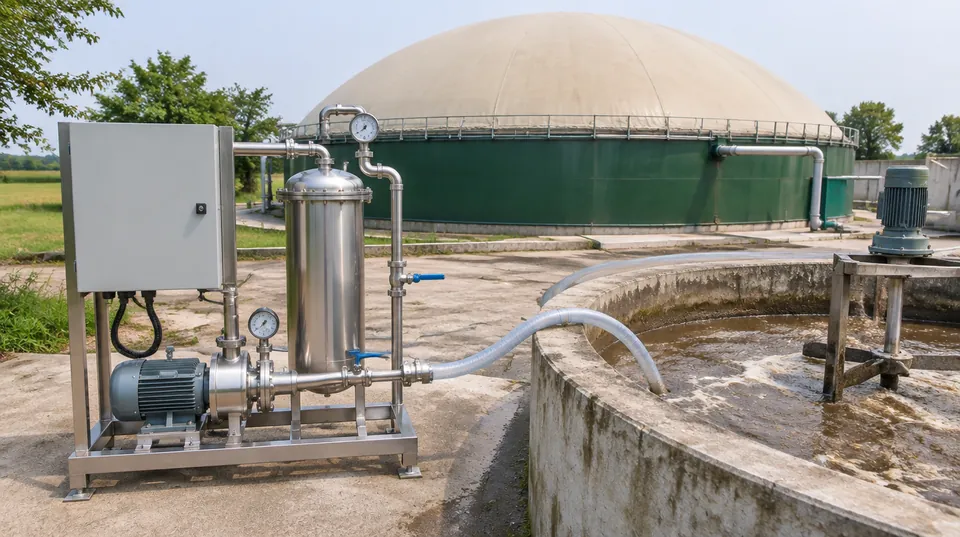
How a pilot would run
- Baseline for four weeks: feed per day and its analysis, gas flow and methane content, digester temperature, pH and VFA to alkalinity ratio.
- Choose the point of use: straw soaking water, or a measured liquid dose to one digester, never gas sparging.
- Run with feed held steady, so any change in gas per tonne is not just a change in feed.
- Compare gas per tonne of volatile solids against the baseline and against a second digester if the plant has one.
- Decide on full-scale use only from the plant's own numbers.
Avior's generator is a skid outside the tanks: a pump, a gas supply and the generator, all serviced above ground. We have not yet run a biogas installation, so a first pilot is exactly that: a measured test, not a promise of gain.
What to send us
- Feedstock mix and daily quantity, with any analysis (total solids, volatile solids)
- Digester type, number and volume; operating temperature
- Design and actual gas output, and methane content
- Pre-treatment in use
- pH, VFA and alkalinity records, if kept
- Problems seen: foaming, souring, scum, winter drop
CBG plant biogas yield: FAQ
What is the SATAT scheme?
SATAT (Sustainable Alternative Towards Affordable Transportation) is the Government of India initiative, launched on 1 October 2018, to build compressed biogas plants and sell CBG through oil marketing companies. It envisaged 5,000 plants producing 15 million tonnes a year.
Why does biogas production drop in winter?
Digester bacteria slow down as the temperature falls, so the same feed makes less gas. Insulating or heating the digester, and lowering the feed rate during cold spells so the digester is not overloaded, keep output steadier.
Is it safe to add nanobubbles to a biogas digester?
Only as a measured dose of nanobubble water, never as air or oxygen blown into the digester, which would harm the bacteria and could make the gas explosive. The research used liquid doses. A pilot starts small, on one digester or on straw soaking water.
Running below design gas output?
Tell us your feedstock, daily feed, digester volume and gas output. We reply within one working day.
Running below design gas output?
Send your feedstock, daily feed, digester volume and gas output. An engineer will tell you what we would check first, and whether a pilot is worth running.